
Composers & repertoire
The habanera before Carmen: the Cuban rhythm that conquered the world
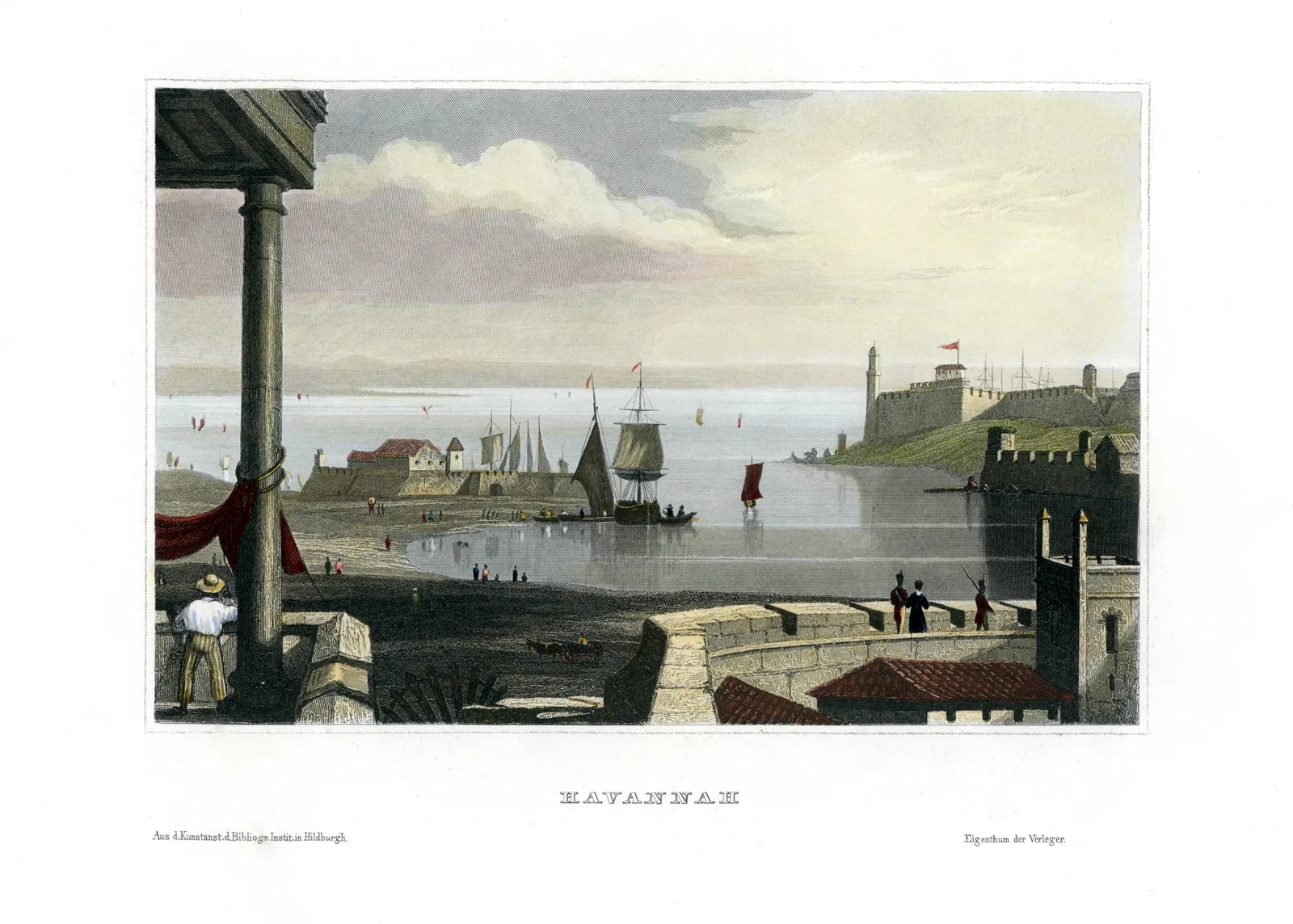
From Havana’s creole contradanza to Iradier and Bizet
On 3 March 1875, Carmen appeared for the first time on the stage of the Opéra-Comique in Paris. Her celebrated entrance song, L’amour est un oiseau rebelle, seemed to capture the character of this woman perfectly: free, seductive, defiant.
The melody would become one of the most recognizable in the entire history of opera. Yet it concealed a remarkable detail: it had been published thirteen years earlier, under another title and bearing another composer's name.
The story takes us from the drawing rooms of Havana to the printing houses of Paris, by way of Spain and the hands of a Basque musician. It reveals how a musical expression born in Cuba became one of the most celebrated sounds of the Spain imagined by French opera.
Havana: When Dance Found Its Voice
At the beginning of the nineteenth century, the Cuban contradanza dominated much of the musical life of Havana's salons. European traditions and Afro-Cuban musical practices had both shaped its evolution, giving rise to an increasingly distinctive rhythmic language.
A significant event took place in 1841. At Havana's Café de la Lonja, El amor en el baile was performed: a contradanza that included a vocal part. On 13 November 1842, the newspaper La Prensa published its score under a revealing description: “Nueva canción habanera” (“New Habanera Song”).
Musicologist Zoila Lapique identified this composition as one of the earliest documentary traces of the contradanza's transformation into song. That is precisely its importance: it shows that, by the middle of the nineteenth century, a musical expression with an identity of its own was beginning to take shape.
Over time, singing contradanzas became increasingly common, while their rhythmic accompaniment acquired a recognizable identity. In this way the habanera took shape as a genre, one that would eventually enjoy an extraordinary reach.
Its rhythm, generally associated with a 2/4 metre, has an unmistakable sway. Yet its character cannot be reduced to a rhythmic formula. The interplay of bass line, melody, articulation and the music's inner movement can lend it restrained sensuality, profound melancholy or an almost theatrical elegance.
Perhaps this ability to take on such different moods explains part of its appeal. The habanera could inhabit a ballroom, become an intimate song or find a new meaning on stage.
And soon it began to travel.
From Havana to Europe: A Genre That Changed Its Identity
The habanera found an extraordinary welcome in Spain. It entered salons, musical theatre and popular tradition, becoming part of the repertoire of different regions. In time it also acquired a maritime, nostalgic quality that remains associated with its performance today.
In France, by contrast, it attracted particular interest among composers seeking new sonorities and evocations of Spain. Emmanuel Chabrier, Camille Saint-Saëns, Jules Massenet and Maurice Ravel, among others, brought the genre into their own musical worlds.
The habanera also left its mark elsewhere in the Americas. Its relationship to the development of the milonga and the tango of the Río de la Plata belongs to a complex history of exchange in which many traditions converged. Its influence was considerable, although it would be inaccurate to credit it alone with the birth of those genres.
Among the musicians who helped carry it beyond its borders was Sebastián Iradier, born in Lanciego, Álava, in 1809.
A pianist, organist and composer, Iradier travelled to the Americas in 1857, visiting the United States, Mexico and Cuba. His encounter with the island's music left a recognizable mark on his compositions.
In 1862, the Parisian publisher Heugel issued one of his songs under the title El Areglito, with the subtitle Chanson havanaise. The edition explicitly credited Iradier with both the music and the Spanish words.
Anyone listening to that song today will immediately recognize something familiar: its melodic contour, chromatic movement and accompaniment unmistakably anticipate the famous habanera from Carmen.
Iradier's song was already circulating in Paris long before Bizet's opera reached the stage.
And here begins one of the most fascinating episodes in this story.
Carmen: The Melody Bizet Did Not Write from Scratch
The creation of the habanera in Carmen was more troubled than its apparent naturalness might suggest.
Célestine Galli-Marié, the first singer to portray the character, played an important part in shaping her musical and theatrical identity. According to an account recorded years later by the biographer Charles Pigot, she was dissatisfied with an initial entrance song written in 6/8, prompting Bizet, it seems, to revise it numerous times.
The music that finally reached the stage in 1875 took Iradier's song as its starting point.
Bizet transformed that material through a new vocal, harmonic and orchestral conception. He placed it within a scene of tremendous dramatic force, where the music expresses Carmen's seductiveness, freedom and unpredictable nature all at once.
But one detail deserves particular attention.
The published edition of Carmen acknowledged that the habanera was “imitated from a Spanish song, the property of the publishers of Le Ménestrel.” Sebastián Iradier's name did not appear.
The paradox is plain: one of the most celebrated passages in French opera was built on a song previously published by a Basque composer and inspired by a Cuban musical genre.
Was this an improper appropriation? Did Bizet know who had written the song? How fully did he understand where the melody had come from?
These questions have given rise to many accounts, some of which are difficult to substantiate from documentary evidence.
It has often been claimed, for example, that Iradier's publishers took legal action against Bizet, or that Bizet was forced to apologize publicly. The documentary sources consulted, however, do not establish that either episode occurred.
Musicologist Hervé Lacombe has even suggested another possibility: that Iradier and Bizet may, at different times, have encountered a popular melody already in circulation. The hypothesis must be treated cautiously, but it reminds us how difficult it can be to establish absolute authorship of certain musical materials from the nineteenth century.
What we can say is that El Areglito was published under Iradier's name in 1862, that Bizet drew on its musical material, and that the edition of Carmen acknowledged an outside source without naming the Basque composer.
The episode raises a question that remains pertinent today: where does inspiration end and appropriation begin when a melody travels across cultures, composers and stages?
Bizet's contribution to operatic history is beyond dispute. But recognizing the melody's earlier journey changes the way we hear it.
For behind the character of Carmen there is also the echo of a story that began long before the curtain rose in Paris.
Music That Continues to Travel
During my master's research into the origins and evolution of ten Cuban rhythms, the habanera held a special place.
When composing my own studies for two flutes, I wanted to discover how its character might be carried into a different instrumental language, without relying on the voice or the traditional accompaniment that had defined much of its history.
The relationship between two melodic lines allows us to explore sway, tension and musical breathing. One voice can sustain the movement while the other seems to resist it. It is precisely in this interplay that the genre reveals new expressive possibilities.
That exploration is also present in Cuban Dances Vol. I, a collection of original compositions for two flutes bringing together three genres from the Cuban musical tradition: mambo, habanera and guajira.
The story finds another resonance in Ozeano Bat, our project for flute and harp devoted to the meeting of Basque and Cuban cultures. Its repertoire brings together Maurice Ravel's Pièce en forme de habanera and Sebastián Iradier's La paloma.
Almost two centuries after its earliest manifestations, the habanera continues to offer new possibilities to composers and performers. Its history reveals music's extraordinary ability to cross borders and take on new meanings without losing the memory of its origins.
And there is still another story to tell.
For Sebastián Iradier wrote another habanera whose reach would prove even more surprising. A song born around the act of leaving Havana that would become a symbol of nostalgia, love and migration in many parts of the world.
Its title is La paloma.
And it deserves a chapter of its own.
Working bibliography
Local sources
- Rosas Llerena, Alberto. 10 kubanische Rhythmen – Herkunft und Verwendung in der Literatur und in eigenen Kompositionen: Etüden für 2 Flöten in leichtem, mittlerem, schwerem und sehr schwerem Schwierigkeitsgrad. Master’s thesis, 2023.
JOURNAL/Masterarbeit Alberto Rosas Llerena.pdf, especially PDF pp. 10–12, 37–39, 80–81. - Rodríguez Ruidíaz, Armando. La canción cubana.
JOURNAL/La_cancion_cubana.pdf, especially pp. 10–16. - Rodríguez Ruidíaz, Armando. La contradanza cubana.
JOURNAL/La_Contradanza_cubana.pdf. - Rodríguez Ruidíaz, Armando. Los géneros de la música cubana: su origen y evolución.
JOURNAL/Los_generos_de_la_musica_cubana_Su_orige.pdf. - Prat Ferrer, Juan José. Clásicos tropicales. Música cubana de salón: contradanzas, danzas y habaneras del siglo XIX.
JOURNAL/Clasicos_tropicales_Musica_cubana_de_sal.pdf, pp. 3–12, 42–47, 128–130. - Clave, year 12, no. 1, 2010. Instituto Cubano de la Música.
JOURNAL/Clave Año 12 no 1 2010 reducida.pdf.
Verifiable external sources
- Lacombe, Hervé. “La Habanera de Carmen et Célestine Galli-Marié”. Opéra-Comique. Principal source for Galli-Marié, revisions, chronology and the editorial note.
- Lapique Becali, Zoila. Research into nineteenth-century Cuban music in the periodical press, in the Revista de la Biblioteca Nacional José Martí (May–August 1975), especially pp. 123–126 of the study consulted.
- El amor en el baile (Anonymous). IMSLP, catalogue entry and transcription based on the research of Lapique and collaborators; useful for checking the title, date, scoring and signature.
- Palazzetto Bru Zane. El Areglito — Iradier. Record of the 1862 Heugel edition held at the BnF.
- Auñamendi Eusko Entziklopedia. “Iradier, Sebastián (1809–1865)”. Institutional source for his biography and journey through the Americas.
- Sánchez Sánchez, Víctor. “La habanera en la zarzuela española del siglo diecinueve: idealización marinera de un mundo tropical”. Cuadernos de Música, Artes Visuales y Artes Escénicas.
- Manuel, Peter. “From Contradanza to Son: New Perspectives on the Prehistory of Cuban Popular Music”. 2009.
- Creolizing Contradance in the Caribbean, ed. Peter Manuel. Temple University Press.
- Bibliothèque nationale de France. “Danses — Habanera”. Institutional overview of the genre’s dissemination and characteristics.
- Lapique Becali, Zoila. Música colonial cubana en las publicaciones periódicas (1812–1902). Havana, 1979. WorldCat record.